Open Science and Innovation: Of the People, By the People, For the People

Open Science and Innovation: Of the People, By the People, For the People

Only a small fraction of Americans are formally trained as “scientists.” But that doesn’t mean that only a small fraction of Americans can participate in scientific discovery and innovation.  Citizen science and crowdsourcing are approaches that educate, engage, and empower the public to apply their curiosity and talents to a wide range of real-world problems. To raise awareness of these tools and encourage more Americans to take advantage of them, the White House Office of Science and Technology Policy and the Domestic Policy Council will host “Open Science and Innovation: Of the People, By the People, For the People,” a live-webcast forum, on Wednesday, September 30th.

Read More

Public Sector Prizes and Challenges Show Increased Sophistication, Ambition and Use: A Fiscal Year 2014 Progress Report

Public Sector Prizes and Challenges Show Increased Sophistication, Ambition and Use: A Fiscal Year 2014 Progress Report

Today, OSTP released its fourth annual comprehensive report detailing the use of prize competitions and challenges by Federal agencies to spur innovation, engage citizen solvers, address tough problems, and advance their core missions. This report details the remarkable results from 97 prize competitions and challenges offered by 30 agencies under a variety of authorities in FY 2014 as required by Section 105 of the America COMPETES Reauthorization Act of 2010 (COMPETES) added Section 24 (Prize Competitions) to the Stevenson-Wydler Technology Innovation Act of 1980 (Stevenson-Wydler).

Read More

Growing the Network of Innovators in Government

Growing the Network of Innovators in Government

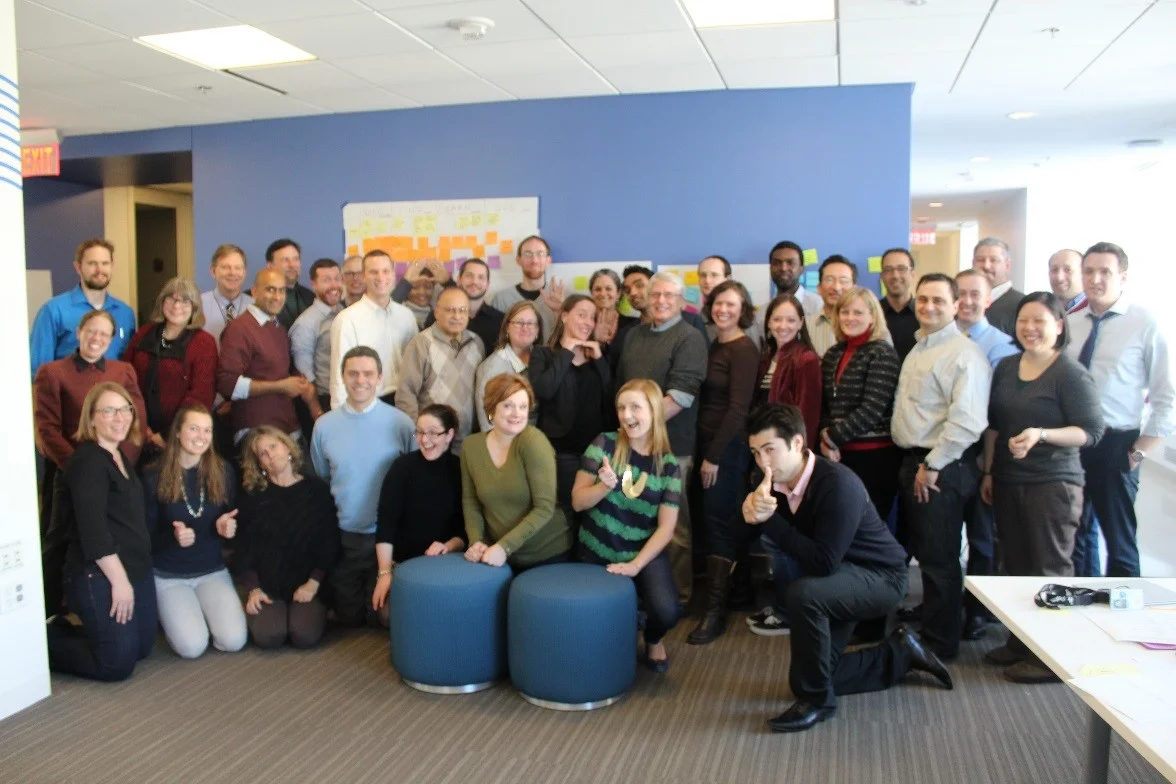
Participants in a variety of Federal fellowship programs bring enthusiasm, new ideas, and fresh perspectives to Federal departments and agencies every day. Last week, the Office of Science and Technology Policy (OSTP) convened a workshop to teach 100 current participants in Federal fellowship programs how to apply creative 21st-century tools to their fellowship projects, and to use these tools to inspire and ignite innovation in government.

Read More

21st-Century Public Servants: Using Prizes and Challenges to Spur Innovation

21st-Century Public Servants: Using Prizes and Challenges to Spur Innovation

Last month, the Challenge.gov program at the General Services Administration (GSA), the Office of Personnel Management (OPM)’s Innovation Lab, the White House Office of Science and Technology Policy (OSTP), and a core team of Federal leaders in the prize-practitioner community began collaborating with the Federal Community of Practice for Challenges and Prizes to develop the other half of the open innovation toolkit, the prizes and challenges toolkit. In developing this toolkit, OSTP and GSA are thinking not only about the information and process resources that would be helpful to empower 21st-century public servants using these tools, but also how we help connect these people to one another to add another meaningful layer to the learning environment.

Read More

Citizen Science is Everywhere, including the White House

Citizen Science is Everywhere, including the White House

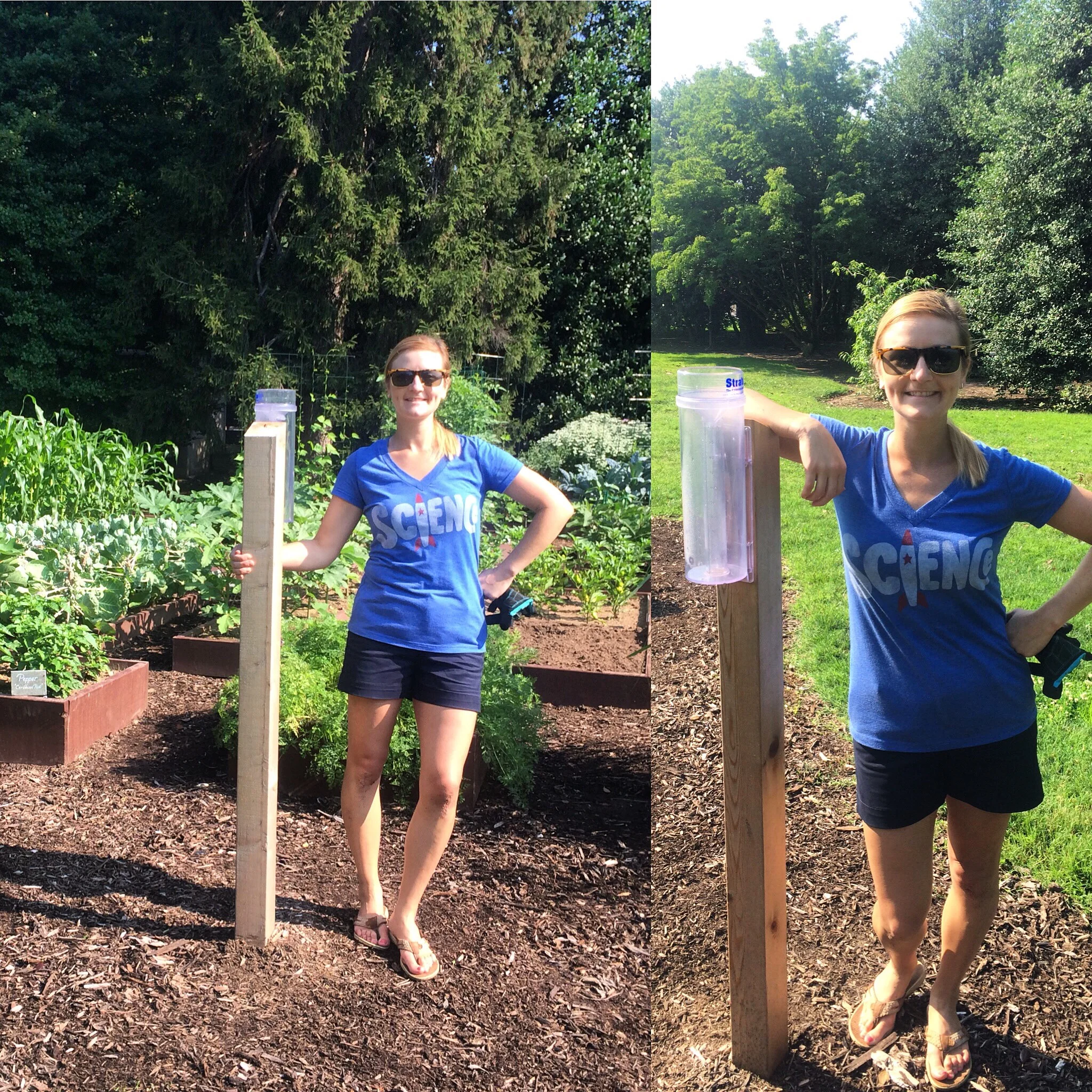
The 5th White House Science Fair, the gave the Obama Administration and a broader community of companies, non-profits, and others an opportunity to announce new steps to increase the ability of students and members of the public to participate in the scientific process through citizen science.  One of these commitments came from the White House itself, showing that anyone, anywhere can participate in citizen science!

Read More

Citizen Science Contributes to Advances in Scientific Understanding

Citizen Science Contributes to Advances in Scientific Understanding

Every day, citizens like you help career scientists advance scientific discovery and understanding of the world around us. Two recent success stories demonstrate the enormous value of citizen science contributions. 

Read More

Designing a Citizen Science and Crowdsourcing Toolkit for the Federal Government

Designing a Citizen Science and Crowdsourcing Toolkit for the Federal Government

On November 21, 2014, the Office of Science and Technology Policy (OSTP) kicked off development of the Toolkit with a human-centered design workshop. Human-centered design is a multi-stage process that requires product designers to engage with different stakeholders in creating, iteratively testing, and refining their product designs. The workshop was planned and executed in partnership with the Office of Personnel Management’s human-centered design practice known as “The Lab” and the Federal Community of Practice on Crowdsourcing and Citizen Science (FCPCCS), a growing network of more than 100 employees from more than 20 Federal agencies.

Read More

How should we coach the next generation of scientists, engineers and technologists?

This week an undergrad from the University of Florida (my alma mater) reached out to me for some advice on getting into MIT for grad school and working for NASA. In writing the response it got me thinking about how we should be coaching the next generation of scientists, engineers and technologists to be preparing for their careers. I’ve copied and pasted the advice I gave to the young student below, based on my personal experience and path. Photo Credit: Vanderbilt

I’m curious what others think though. How would you give a freshman in college advice for prepping for a career at NASA or in any other science and technology job? Do you agree with me? Disagree? What other tactical pieces of advice did I miss? Is this advice universal or are there pieces of advice that should differ depending on geography, background, gender or other considerations?

Freshman Physics Student at UF: "What are some crucial steps to take now if I want to get into a school like MIT or get a job at NASA?"

My Response: “For MIT, keep your grades up and get a sense of what you want to study in grad school. A compelling research proposal is KEY to getting into a grad program at MIT. The dirty little secret though is that you can change your direction once you get in. You just have to write a good one to get in. Use your time in undergrad to explore many different topics and classes. Get to know your professors so you have good recommendations. Don't just rely on grades--actually develop relationships with professors you have classes with or do research with. If you get along with one well, ask them to be your mentor. You are really smart for starting to think about these things as a freshman. You have plenty of time to figure out what intrigues you and develop relationships. Your recommendations, grades, and research statement are critical to getting into MIT based on my experience. Furthermore, once you think you know what topics you want to pursue for grad school, start researching the professors at MIT and their research groups that are involved in those topic areas. Reach out to some of the students in their labs to understand their work better. During your junior year make a trip up to MIT and schedule appointments with the faculty who's work you like and who you might want to do research under in graduate school. Have them know you before you even apply.

On top of grades, recommendations, and research topic, stay well rounded. Take some politics classes or a foreign language class. Stay well rounded outside the classroom. I joined a sorority to keep me social and was involved in student government. I hung out with more than just scientists and engineers. Also, travel if you can. Do a study abroad program and see a different part of the world and experience different cultures. I was never abel to do a study abroad but I did backpack Europe on the cheap for a few months right after graduation. One of the most shaping experiences of my life. Travel, friends outside of your academic area, and making sure to schedule in social activities is key to developing your emotional intelligence and ability to work with many types of people. That will be a critical skill for your future career. It's important to have PEOPLE skills and not just smarts.

And while all this stuff is swimming in your head remember that college is about having fun as much as it is for prepping for your career. Sometimes careers are a combination of hard work, luck and seizing opportunities when they come. Despite your most well laid out plans, the path might look different than you thought. Resiliency, adaptability and curiosity are really critical skills nowadays. College should prepare you to be adaptable, curious, good with people, and intelligent (emotionally and mentally). So don't put too much pressure on yourself. Do your best to study topics you find interesting and learn how to learn. Too often we just study for the test and don't really learn. Learn how to learn. You'll do it for the rest of your career. That's a skill employers and graduate programs will look for.

Also for space specific stuff, you should try to get involved in the NASA Social activities (follow them on twitter) and also if you're not already find the people the participate locally in things like Yuri's Night. Those fellow space nerds are a great network to have and great people to help you get connected to what’s going on in space). Apply to a summer internship or co-op program at one of the centers. Email NASA engineers and researchers at centers and see if they’d be willing to grab coffee with you and talk about their work. And never be afraid to reach out to people doing a job you think you might want to do (like you did with me). Building your network through those types of informational interviews is really smart.

To me, the key really is learning how to learn and growing your network. Experts in particular know what they don’t know and know when to ask someone a question. You shouldn’t strive to be perfectly qualified from the beginning. You can’t possibly be. You should strive to develop the tools you’ll need to be able to grow and effectively implement projects throughout your career. The intangibles are just as important as the tangibles (grades, test scores, etc) but they will be infinitely more critical as a foundation for the rest of your career. And you only live once, so you should make sure to enjoy the ride :)

Good luck, and Go Gators!”

Featured in Popular Mechanics: How to Make NASA Cool Again

  Photo Courtesy of Philip Friedman

I am honored to be featured in the the August 2014 issue of Popular Mechanics. This issue has a series about "How to Make Anything". NASA's work in prizes, challenges and crowdsourcing is featured in a piece entitled: "How to Make NASA Cool Again".

Here's the text:

"At some point between the Challenger explosion in 1986 and the end of the manned shuttle program in 2011, NASA became uncool. Once regarded as the wild geniuses leading us bravely into the future, the agency earned a reputation as insular, wasteful, and out of touch.

Naturally, they're looking to change that perception. The agency recently expanded its use of challenges and crowdsourcing to include more opportunities for regular Joes (citizen scientists, if you can bear the term) to submit their ideas. In 2012, it also hired Jenn Gustetic, a vivacious woman with an aerospace engineering degree and a master's in technology policy from MIT, to engage the public as the first-ever Challenges and Prizes program executive.

In this role, Gustetic, 32, uses her brains, charm, and wicked networking skills to increase grassroots participation in NASA's far-ranging mission. In the process, she's breaking down the wall that once separated a massive bureaucracy from the people it was supposed to serve. "It's my role to engage the public and put together nontraditional alliances to solve tough technology problems," she says. "NASA is opening itself up. We're inviting the public to be a meaningful participant in our business, our projects. This wasn't the way things were done, but it's the norm now."

One little problem Gustetic is helping to solve is the threat of an asteroid impact, which NASA has deemed worthy of intensive study as part of a larger initiative that includes not only redirecting space rocks but also sending humans to study them. The Asteroid Data Hunter contest, which wrapped in August, offered awards of up to $35,000 to individuals who advance the development of algorithms to identify asteroids in imagery from ground-based telescopes.

Another of Gustetic's responsibilities is to rally teams for NASA's International Space Apps Challenge. This year, more than 8,000 people in 95 cities took part in the third annual two-day hackathon to develop tech related to deep-space exploration, manned missions, rovers and more. "It was a historic collaboration between a government and the public," says Mike Caprio, cofounder of Space Apps NYC, the main stage of this year's event. Teams of technologists of every stripe, from computer programmers to physicists, arrived at universities and labs all over the world to compete. After a long weekend, a few left with impressive CV fodder. The rest left impressed with their host."

NASA finds big payoffs in crowdsourcing (Guest Post on VentureBeat)

Cross post from Venture Beat (http://venturebeat.com/2014/03/10/nasa-finds-big-payoffs-in-crowdsourcing/) Crowdsourcing is an important trend, and it’s not just for pooling together knowledge on a wiki page. In fact, it’s proving extremely valuable for researchers.

At NASA, for example, we are working to more effectively harness the expertise, ingenuity, and creativity of individual members of the public by enabling, accelerating, and scaling the use of open innovation approaches including prizes, challenges, and crowdsourcing.

NASA recognizes that these methods present an extraordinary opportunity to inspire the development of transformative solutions by offering a means to engage with non-traditional sources of innovative ideas, all in a remarkably cost-effective way.

We are an agency founded on solving tough problems, and we believe in the power of open innovation to help address those problems in partnership with innovators from around the country and the globe.

To do this, we are creating opportunities regularly for broad engagement through our prizes, challenges, and crowdsourcing activities.

NASA’s challenges conducted during 2013 illustrate the many benefits of this approach and unique outcomes they create:

  •  Some challenges allowed us to seek solutions and stimulate innovation from non-traditional sources.  In addition to individuals participating in online crowdsourcing activities, we saw very small teams, including father-son, husband-wife, and friends, which were attracted to the unique opportunity of competing in a Centennial Challenge. For example, a level one prize winning team from 2013’s Sample Return Robot Challenge — Team Survey — was comprised of friends from Robot Wars that now work at the same company.
  •  Some challenges helped us fill the gaps in our understanding of the current technology landscape in priority research areas. For example, through the Non-Invasive Measurement of Intra-Cranial Pressure Challenge, NASA sought ideas for measurement technologies that could help us understand better why some astronauts who have been on long-duration missions (six months in microgravity) experience changes in visual acuity and in eye anatomy. NASA suspects that these changes in the eye are related to increased intracranial pressure and sought approaches to monitor this pressure non-invasively over time. As a result of this challenge, NASA identified four new potential solutions in the current marketplace and discovered three high-interest solutions and an additional five leads on developing technology that we will continue to follow.
  •  Some challenges helped us to understand how complicated engineering problems could successfully capitalize on crowdsourcing techniques — even contributing to the creation of an interplanetary Internet! NASA is developing a suite of network protocols that can withstand the time delays due to the immense distances between planets and the disruptions and non-contiguous paths of the space communications links.  Through the Disruption Tolerant Networking (DTN) challenges currently being conducted with the NASA Tournament Lab, we are demonstrating that the security, performance, and application of these network protocols can be improved through crowdsourcing.
  •  Other challenges demonstrated to us the unique nimbleness and flexibility of this tool. One research paper that studied a set of challenges conducted on the NASA Tournament Lab found that “NASA program managers have cited certain benefits that are unique to procuring technology through challenge-driven methods.  Managers often ran a number of challenges in a series, which allowed them to learn from earlier challenges and redefine requirements for subsequent challenges if desired.  Managers described this process as being “more nimble and flexible” than traditional procurement methods.”

In an increasingly connected and networked world, NASA recognizes the value of the public as a strategic partner in addressing some of our most pressing challenges.

We welcome and embrace the crowdsourcing trend, which enables more people to be actively involved in their space program.

For more information on NASA’s use of prizes, challenges and crowdsourcing see:http://www.nasa.gov/content/prizes-and-open-innovation/

Jenn Gustetic is Prizes and Challenges Program Executive in the Office of the Chief Technologist at NASA. She will be speaking on NASA’s crowdfunding programs at the upcoming Crowdsourcing Week Global conference in Singapore.

Beyond Hackathons: Using Design Thinking to Address Local Challenges with DT:DC’s Summer of Design

Today, apps contests, hackathons and data jams abound at the federal, state and local level in both government and industry. These engagements seek to harness the intellectual power of increasingly capable and bountiful developers, increase customer and public engagement with brands and government agencies, and solve tough problems while stimulating spinoff innovation while they’re at it. But what if you’re not a developer? What if the problem isn’t only one of data and technology? How might other skill sets and problem solving processes be used to amplify the effectiveness of challenges in developing sustainable, appropriate solutions?

More specifically: How might we channel the energy and potential of 1300+ passionate designers, innovators, entrepreneurs and technologists in the DC community thirsting for (1) new skills and tools in recognition of new trends in that ways we work within society and (2) productive ways to apply those skills and contribute to the numerous problems our local community faces?

This summer, Design Thinking DC (DT:DC) is testing a pretty radical hypothesis about how to build upon the practices of challenge-driven open innovation, crowdsourcing, and design thinking to make local impact through our Summer of Design:

Hypothesis: Our community can make significant headway on a number of wicked problems that local organizations and stakeholders face through the application of a Design Thinking process and a volunteer based, challenge-driven approach. 

Outside of my “day job” (federal open government, open innovation and incentive prizes), for the last two years I’ve been helping to co-organize the design thinking community in DC through DT:DC founded by Stephanie Rowe in 2011. This community has steadily grown to more than 1300 people today. DT:DC’s Summer of Design is an attempt to test the hypothesis articulated above through a series of events in which volunteers from DT:DC apply design thinking techniques to real problems faced by organizations in our local community.

This team-based design competition was structured to include introductory workshops on design thinking and prototyping and a six-week design challenge. After the workshops, each team works independently and structures its own approach to researching, prototyping and designing their solution to the design challenge they’re addressing. Through a competitive application process, DT:DC selected challenge organizations earlier this summer who have design and/or business challenges that would benefit from the multidisciplinary collaboration, thinking and prototyping of our Summer of Design volunteer teams. We announced those design challenges last night at 1776 at a kick-off event sponsored by the DC Department of Small and Local Business Development. We are happy to share that we have an incredibly diverse and rich set of challenges for the design teams to address over the coming weeks including:

Title: Leveraging Open Data to Drive Better Decision Making

Challenge Organization: DC Action for Children

Design Challenge: How might we help at-risk children in DC by connecting the people who serve them to the data they need to be change-makers in key policy areas like education, health and poverty-reduction?

Title: Rapid Information Gathering in Crisis Situations

Challenge Organization: Internews

Design Challenge: How might we redesign the way we collect critical information in crisis situations, such as natural disasters, to quickly understand and fulfill the needs of those directly affected by the crisis?

Title: Inspiring Government Performance

Challenge Organization: Performance Improvement Council

Design Challenge: How might the PIC reintroduce and rebrand Performance Management to government employees so that they are better equipped to identify, solve, and communicate the current and emerging wicked problems facing US citizens?

While the DTDC Summer of Design Leadership Team (Dawan Stanford, Arty Rivera, Wendi Chiong, Brent Davidson, Nathan Ritter, Stephanie Wade, Ryann Hoffman, and yours truly) has worked diligently to design the challenges with the organizations, structure the check-ins throughout the design period, and facilitate workshops to familiarize participants with design thinking methods, the next stage of the Summer of Design is largely up to the teams. For the next 6 weeks our teams will be working to develop solutions to these design challenges following a design thinking process. Winners for each challenge will be announced in September. The energy is palpable now that the teams have been unleashed on the challenges and we’re excited to see what they come up with!

By the end of the fall, after the conclusion of Summer of Design and the initial indications from the partner organizations about the sustainability of the solutions, we hope to have a variety of rich insights:

  1. Beyond hackathons: Are curated design challenges an effective means for channeling local engagement beyond “apps contests”, “hackathons”, single volunteer events, town halls, etc…? What’s the anatomy of a successful design challenge?
  2. Participation rates and incentives: What percentage of our local DC design community ultimately self-selected to participate in this type of intense, case based activity? Why did they self-select? What did the drop out rate look like? What incentive structures attracted meaningful participation? How could this scale to other cities?
  3. Problem suitability: What types of local, wicked problems can be meaningfully re-thought through a design thinking approach? Where does this approach to problem solving have maximum impact relative to other problem solving methods?
  4. Viability of approach: What are the cultural or political challenges that organizations face that raise fear and prevent them from innovating? How can we successfully introduce and harness the enthusiasm volunteers have to develop appropriate solutions when working in an open source format?

We look forward to sharing these insights and other with you as the Summer of Design progresses. So what’s your prediction? Will our hypothesis be correct?


Championing Change in Gov: Why Can’t Government be Both Functional and Beautiful?

It’s not impossible. Government CAN BE both functional and beautiful. Today the White House hosted a Champions of Change event in Washington DC highlighting thirteen local government innovators that are doing just that.  According to Gov Tech, these champions have “worked to build a better future for their citizens, create jobs in their community, and ensure more efficient and effective government by making information and public data more accessible”. The folks highlighted today understand that true local innovation—changing the paradigm of the citizen’s relationship with its government—is not just as simple as creating “an app for that”.

Figure 1: Some Features of Transformative Local Innovations

When citizen engagement, crowdsourcing, and design thinking are also considered in the innovation process, truly transformative approaches to local government emerge that are changing the way we can think about what’s possible in governing. An app might be the mechanism, but how to build in engagement and design are lessons that many government agencies are still learning. When governments do this however, innovation efforts result in citizens who find more value from, participate in, and contribute to their community’s well being. According to Doug Matthews from Austin, Texas, almost as important as the function of a tool/product is the beauty of that function. The innovators highlighted today understand that well-designed government innovations should be many things, not just functional:

  • Innovative
  • A useful product
  • Aesthetic
  • An understandable product
  • Unobtrusive
  • Honest (don’t make promises you can’t keep)
  • Long lasting
  • Thorough
  • Environmentally friendly
  • As little design as possible (focus on only the essential elements)

Seeing Design Thinking in action in local communities around the US is incredibly gratifying. Design Thinking in and of itself has become a movement over the last several years spearheaded by the likes of the Stanford Design School and design firm IDEO (Disclaimer: Last year I kicked off a Design Thinking DC Meetup Group with a friend and colleague, Stephanie Rowe, to get this conversation going in DC). But when COMBINED with the other tactics we’re seeing these local governments use—Design Thinking becomes a force multiplier for real, honest to goodness impact in people’s lives.

As an example of the types of local innovations described by the champions, we turn to Boston, Massachusetts. Many cities have been collecting complaints and service requests through 311 programs for years. In recent years, inspired by the DC government’s pioneering efforts in open data (shout out to @kachok), many cities started opening up that data through open311 platforms. However, 311 data is only ONE source of data for what is truly happening in a city. Nigel Jacob and Chris Osgood from Boston, Massachusetts are pursuing ways to augment 311 data with other sources of data about the city—that comes from the palm of your hand.

Street Bump is a new app that turns mobile phone accelerometer data into a pothole service request to the local government. An accelerometer collects A LOT of data. So to identify when the vast amounts of data collected by the device indicated there was a “pothole”, Boston partnered with Innocentive to run a prize competition for an algorithm. Equipped with lots of potential data and an algorithm to analyze that data, Boston leveraged Design Thinking principles, working with IDEO, to design an app that would create an experience to enable data sharing with the government. Boston, using mobile phone technology that residents have already invested in, is experimenting with crowdsourcing additional data to compliment the 311 data set to better address service needs in the city.

It’s important to understand their process here: they did NOT go straight to an app. They made sure they had the data sources, the algorithm, the design and the public experience pieces figured out before they developed the tech.

Many other examples of this approach in action were highlighted today at the White House event as well. As Todd Park, the US CTO, said, “We’re not seeing one bright light; today demonstrates there is a constellation of bright lights. This is a movement. It’s extremely exciting.”

What other examples do you know of where government is being transformed—at any level—to be more functional AND beautiful through better design, use of IT, and citizen engagement?

As always please feel free to reach out in the comments section or to @jenngustetic to discuss further. Thanks for reading!

Jenn


Why Innovators Should be Paying Attention to Prizes

Innovators—including government innovators—should be paying attention to prizes because they work, because they add another tool to their innovation tool belt, and because they are already being used by a typical late adopter—the government. I’ve been a student of prizes and competitions in government for several years now—there is always something to learn: a new success story, an understanding of new enabling legislation, a new prize structure you’ve never seen before, etc. It’s a fascinating field because every prize is different: if you’ve seen one prize… you’ve only seen one prize.

So why do prizes, in fact, matter? Why should the next generation of leaders be thinking about them? Bottom line: they work. (Check out the Prezi I created for a recent lecture I gave at MIT on this topic for more details on the assertions and examples below)

Before I dive into some examples of how they’ve been proven to work though, it’s important to set context: I’m not only referring to app contests and video competitions, which can be great introductions to Agencies about the process for conducting a prize, but more importantly prizes that are specifically designed to solve root cause issues that have been pervasive in their sector for some time.

Often government is a very late adopter of new tools, technologies or approaches, but that’s not the case when it comes to prizes. Prizes are resulting in real value and tangible technology innovations. And there’s not just one example—the list of success stories is growing every day. For example, prizes have brought real solutions to bear for many sticky problems, including:

Transportation Energy Efficiency: This October, NASA awarded the first place prize of $1,350,000 in the Green Flight Challenge sponsored by Google to Pipistrel-USA.com of State College, PA, and second place prize of $120,000 to eGenius of Ramona, CA. The winning teams, which were both electric powered, shattered the fuel efficiency requirement by achieving about twice the required 200 passenger miles per gallon.

Energy Efficiency: The first L Prize (a prize sponsored by the Department of Energy) category targets the 60-watt bulb because it is one of the most widely used types of light bulbs by consumers, representing roughly half of the domestic incandescent light bulb market. As the first entrant in the 60-watt category to successfully meet the full competition requirements in Fall 2011, Philips Lighting will receive a $10 million cash prize as well as L Prize partner promotions and incentives.

International Development: The Gates Foundation and USAID have partnered for the Haiti Mobile Money Initiative (HMMI), a $10 million incentive fund to jumpstart financial services by mobile phone in Haiti and expedite the delivery of cash assistance to victims of the country’s devastating earthquake by humanitarian agencies. This initiative lays the foundation for advanced banking services that could help millions of Haitians lift themselves out of extreme poverty. In January of this year, Haitian mobile operator Digicel won a $2.5 million award for being the first to launch a mobile money service in Haiti, Tcho Tcho Mobile, that meets the competition’s stringent criteria. The second operator to launch a mobile money service within 12 months will receive $1.5 million. Another $6 million will be awarded as the first 5 million transactions take place, divided accordingly among those that contributed to the total number of transactions.

The fact that prizes have been shown to incentivize the creation of new and innovative solutions, when designed and executed properly, means that innovators should be paying attention to them.

We have to keep in mind that each prize is unique because of incentives, solvers, structural designs, and sequencing required to solve the problem at hand are each unique. And because there’s no formula to do them correctly they are very hard to teach (though folks like McKinsey, Jaison Morgan, the General Services Administration, Tom Kalil, Peter Diamandis, Karim Lakhaniand others have published great information about what makes them tick). The truth is, there are many flavors of prizes that each have their own unique benefits and drawbacks. An understanding of different prize types is a huge resource to add to your innovation tool belt. Actually, I think it’s an innovator’s responsibility to understand them.

A large case for the value of prizes can be made but I can’t neglect to mention that there are also naysayers. Prizes are one tool in a rather large tool belt to stimulate innovation. Grants, contracts, loans, concessions, public private partnerships, and a host of other tactics can also be applied as appropriate. Given this context, questions about prizes as a legitimate government procurement mechanism have been raised and others feel like prizes can be seen as a “waste of taxpayer dollars” when the government is footing the bill. Personally, I think a debate on this issue is very healthy.

So what do you think? Has enough of a business case been made to get more innovators thinking about using prizes? Or are there areas of study and concrete examples that still need to be explored? What would help you make the best case for adding prizes to your “innovator toolkit”?

As always, if you have any questions feel free to reach out to me at @jenngustetic.

(Note: Originally posted on the Phase One Consulting Group, Government Transformation Blog for a special featured Govloop series when I was an employee there. www.phaseonecg.com/blog)
Can the US Government Use Open Innovation to Save $1 Billion?

“Now that the worst of the recession is over, we have to confront the fact that our government spends more than it takes in. That is not sustainable. Every day, families sacrifice to live within their means. They deserve a government that does the same.” President Obama, January 26, 2011

The budget crunch is currently consuming all parts of government. CFOs and other executives are searching for ways to deliver their mission at reduced budgets—to do “more with less”. Many programs and services are required by law to exist, so budget cuts aren’t as easy as they may seem; the government will still need to provide a level of service and degree of public value to meet their statutory responsibilities despite less money to do so. Thus the need for innovation—both static (doing what we do today better) and dynamic (doing completely new things that didn’t exist before)—is of paramount importance. This post will explore how the forthcoming Open Innovation Strategy from the White House may (or may not) help focus the power of innovation on the budget woes of the United States to realize enormous budget savings and increase public value.

From Open Government to Open Innovation…

As I wrote last year, “Open Government is not dead (sorry Vivek). Open Government initiatives are only part of what is required to cultivate an innovative agency culture. They are an important part of a much larger innovation ecosystem, but only one part nonetheless. To cultivate a culture of innovation, the broader picture of what “innovation” means to the Federal Government is critical to understand.” Thus, especially in this budget environment, it’s refreshing to see the conversation about open government being reframed to “open innovation” at the White House.

On Friday, June 10th, CTO Aneesh Chopra and CIO Vivek Kundra as well as other Administration officials, hosted an Open Innovation / Champions of Change event at the White House where, among other things, they previewed the President’s forthcoming Open Innovation Strategy. There were many interesting takeaways from the event but this post will focus on “previewing” Open Innovation and what this new strategy might mean in this era of reduced budgets. (For additional press coverage see White House Honors Unsung Open Data App Developers from Government Technology).

In his opening remarks, Aneesh described the White House’s soon to be released Open Innovation Strategy as integrating the principles of open government and innovation work previously done by the administration. In short,

Strategy for American Innovation + The Open Government Directive = Open Innovation

He outlined the following principles of Open Innovation:

  • “Innovation should help the government spend money smarter
  • Innovation should improve customer service and get the government to where the people are
  • Innovation should be integrated in delivering new and old products and services
  • Innovation isn’t just about the outcomes, it’s about the process”

Furthermore, he identified four key policy levers for open innovation and some examples where they are already working in government:

  • Democratize government data: For example, the USPTO has partnered with Google at no-cost to provide access to a 3+ terabyte patent database, encouraging reuse of data. This database is indexed on a clean tech marketplace to a taxonomy of 246 clean tech categories, facilitating capital investment. This green technology initiative, based on government data, connects investors to relevant IP.
  • Encourage market transparency: For example, HHS has created a catalogue of public and private insurance plans that includes denial and pricing information to help people make better choices about their insurance (http://www.healthcare.gov/). This site provides transparency on price, measures on denials, and “surcharges” to ensure robust competition.
  • Cultivate innovation ecosystem: One example is the DARPA “crowd designed” combat support vehicle. The winner was awarded a contract and the first was slated to be produced in June. Another interesting example occurred last year when a White House rep attended a “gaming” conference and brought a gaming company’s attention to some of the government’s open data. As a result, a new version of an EA snowboarding game will include mountains that are built from NASA’s mountain topography dataset. (Cool!)
  • Create capacity for innovation: For example, VA’s “blue button” is now being replicated by Aetna and Walgreens. The government set an example/best practice that the private sector is adopting. What’s neat about blue button is that it’s spurred an autonomous co-creation environment – one that unlocks new kinds of public value for NOT ONLY veterans, but now for society as a whole.

These experiments demonstrate the open innovation has REAL potential to create public value. Thus, I’m excited for the open innovation strategy to be released in the coming months—it is a necessary next step in the evolution of open government. However, what’s NOT been articulated as clearly as it needs to be is HOW open innovation will help government spend money smarter and better partner to deliver services during a time of reduced budgets. That’s where some of the other discussion at the event comes in…

Saving money through innovation…

To me, the potential for this new strategy was articulated best by Bruce Brown, Chief Technology Officer, Proctor and Gamble (P&G), a panel member later in the event. Bruce told a concrete story about how P&G’s investment in innovation has saved P&G billions, increased shareholder value, and increased revenues. Bruce spoke about how the culture of P&G had always developed everything “inside” but there was recognition at the top that an insular approach would not maintain an innovative edge in an increasingly competitive market. So in 2003 they created the “connect and develop” open innovation program with a goal of 50% of ALL innovations having an external consultation component. This was a radical shift for their culture.

However, the shift towards looking outside seriously impacted their bottom line. For projects with an external component, shareholder value has generally doubled to tripled as compared to projects that don’t have an external component. But this new commitment did cost them some upfront investment. The shift required fundamental changes to the way the company operates, including IT systems, incentive schemes, etc. Additionally, they created an $85M corporate innovation fund to invest in new innovations. However, P&G has realized some concrete savings through these investments in innovation; through looking outside their walls for new ideas (in licensing) P&G partnered with Los Alamos labs to license reliability engineering technology,which has saved them $1B over the last few years. That’s not pocket change. This example demonstrates that open innovation can save real money.

Achieving public value through innovation…

So how can government learn from P&G’s approach to innovation and address its immediate (and long term) need to “do more with less”? If P&G’s ultimate metric is shareholder value to determine the benefit of their innovation program, how should government work to tie innovation programs to public value, the ultimate metric for government? The Center for Technology in Government at the University of Albany has been thinking through how to tie public value to open government programs. Do you think their logic could also apply to open innovation programs?

As most of us would agree, innovation isn’t only about releasing data—it’s about doing existing things better, inventing completely new high value services that make others obsolete and fundamentally rethinking how the government works with partners to provide public value. Thus, this event also got me and some colleagues (including the always brilliant Dan Morgan @dsmorgan77) thinking about how different open innovation really is from other public value optimization frameworks. Because, at the end of the day, open innovation is about producing more public value at lower cost to the government, right?

For example, take Bill Eggers and Steven Goldsmith’s book Governing by Network and Deloitte’s recent report on Creating Public Value by Releasing the Power of Cross Boundary Collaboration.Co-creation, collaboration, and leveraging networks are not new concepts—they’ve been studied extensively for years. Thus when reflecting on the forthcoming open innovation strategy, a few fundamental questions occur to me:

  • Could open innovation just be as a new buzz word for more effective co-delivery and co-creation?
  • Or is open innovation itself in fact a new way to co-create and collaborate to create public value?
  • What makes open innovation different from the co-creation, if at all?

I hope to do a much more in-depth analysis of these differences once the strategy is released in full, soon.

Some new trends are likely coming…

What open innovation will force us all to think about is new ways for government to do business. Combined with reduced budgets that won’t support large pilot projects, the tactics we see the government using to provide services and value might shift significantly. For example, we could see several structural changes to the way the government partners:

  • We could see a rise in Public Private Partnerships (PPPs) for service provision. These could both be no-cost partnerships (like the USPTO partnership highlighted above) or 30-year concession contracts for infrastructure construction (see this former posting of mine on infrastructure development PPPs)
  • We could see a rise in the use of loans and leveraging instead of or in addition to grants. This may change delivery structures. A guaranteed loan isn’t the same as a grant. Loans are largely re-paid; grants aren’t.

Regardless of the structural changes, we will be forced to do more with less. Several agencies have already shown that public value can be achieved through open innovation and P&G has shown that it’s also an effective tool for budget savings. The basic question whose answer remains to be seen is: how will government leverage open innovation as part of its toolbox to create public value?

(Note: Originally posted on the Phase One Consulting Group, Government Transformation Blog for a special featured Govloop series when I was an employee there. www.phaseonecg.com/blog)

ROI on US “Campaign to Cut Waste” from the UK Experience

This story summarizes some twitter conversations that relate to several US Executive Orders on Customer Service and website consolidation. There are a lot of orders being released, but it's unclear what the ROI on the responses to those orders will be. This story brings that discussion together in one place. Read the complete Storify log for more details. [View the story "ROI on US \"Campaign to Cut Waste\" from the UK Experience" on Storify]

Observations from a Judge: Three Takeaways for Federal Prizes from MIT’s Global Challenge

Over the past few weeks I had the pleasure of serving as a global judge for the MIT Global Challenge which ended in an exciting awards ceremony Monday in Cambridge, Mass. The Challenge is designed to connect students” with the passion and talent to improve the world with the experience and resources of the MIT community worldwide.” MIT views innovation and entrepreneurship as public service through this annual competition that awards up to $25,000 per team for the best ideas to tackle barriers to well being. A snapshot, borrowed from the challenge website, illustrates the structure of the challenge:

Framework for MIT Global Challenge

Through the course of judging this challenge three invaluable ideas stuck out that I think can help all of us  as we continue to explore the use of prizes in the federal government:

(1)    Team judging is a great option for the participating teams: The global challenge set up the judging process so all judges were assigned to judging teams (I was in team “Thundercats”).  Teams consist of 4-6 judges who all independently review 5 submissions and then work together to schedule interviews with the teams to clarify any outstanding questions. Furthermore, the interaction with the teams doesn’t end with those interview calls. I found that many judges wanted to stay in touch with the teams after the challenge was over and continue to mentor them to help contribute to the success of their ideas. Also, the teams I spoke with at the awards ceremony are genuinely excited to continue a relationship with their judges to help make their idea a reality—even if they weren’t a winner. My major lesson here was that in as much as prize competitions can help develop relationships between the participating teams and judges, an ongoing mentoring network can be set up organically.

(2)    Team judging is also great for the judges themselves: Working together to interview the teams was by far the most valuable part of the experience for me. Through the planning, interviewing and follow-up conversations we had, I got to know a truly phenomenal group of MIT alum that are passionate about development. Membership on my group was diverse including a doctor, a USAID innovation leader, a 3M senior engineer, and a DC-based strategy consultant. I’m excited about continuing my relationship with those folks in years to come. I learned a lot about where the cutting edge, innovative concepts at the university level for development currently are, was able to give back to my alma mater, but also developed relationships that are incredibly valuable to me as well. All the right incentives were in place for judges in my mind.

(3)    Leveraging a strong, existing network drove high participation: The MIT IDEAS Challenge relies on one major network—the MIT student and alumni network. Eligible participants are within that network, judges are within that network, and many sponsors come from that network. By focusing on a community that was vested in continuing the growth, development and health of that community, an existing incentive structure was already baked in. The result? In 20 days, 117 countries and 14,000 voters participated in the public judging process for the awards. Also, over 50 judges from across the world participated in the juried awards. A community didn’t need to be DEVELOPED for this challenge—they leveraged one that already existed. This community was primed for challenges and has responded accordingly.

Overall, I had a wonderful experience participating in the judging process. I would do it again in a heartbeat and look forward to the impact the winning teams will make in the developing world in the next year.

In addition to liveblogging the awards ceremony (see the coverage on the live site here), a couple of the teams I evaluated ended up winning several prizes; congrats to Innobox and AQUA for their great ideas!

(Note: Originally posted on the Phase One Consulting Group, Government Transformation Blog for a special featured Govloop series when I was an employee there. www.phaseonecg.com/blog)